Anesthesia in Dogs and Cats: What Every Pet Owner Should Know

Updated: Aug 16
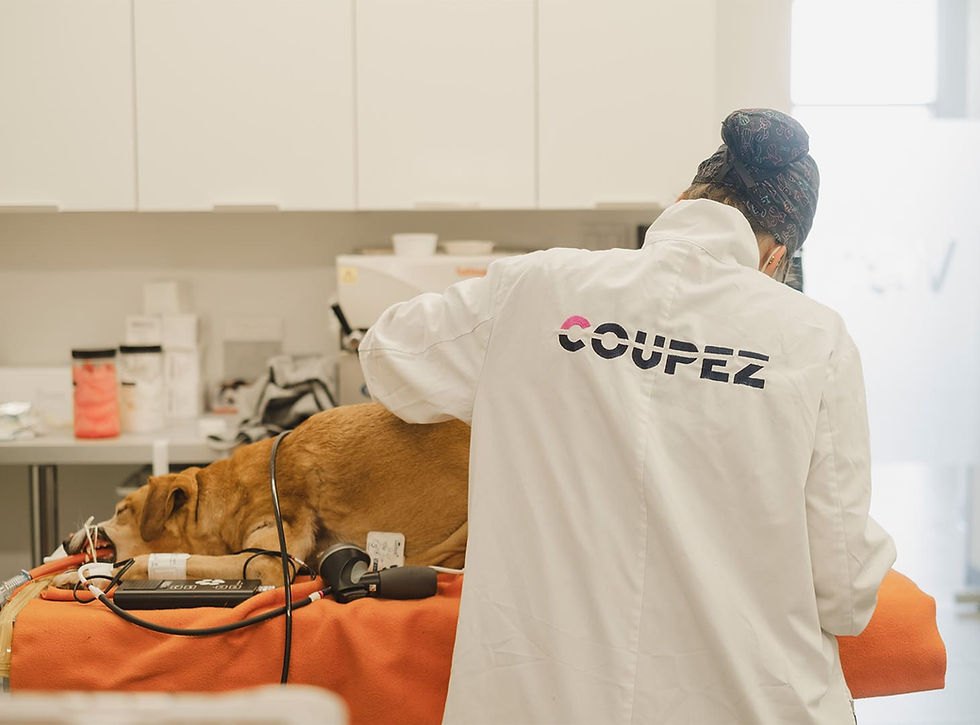
Is veterinary anesthesia in dogs and cats dangerous?
No. Modern veterinary anesthesia is considered very safe. In healthy dogs and cats, the risk of serious complications related to anesthesia is estimated between 0.1% and 0.2%, which means that more than 99% of anesthetized pets wake up without major complications (Brodbelt et al., Veterinary Anaesthesia and Analgesia, 2008; CVMA, 2020).
That said, it is completely normal to feel worried. This article answers the most common questions from pet owners to help you approach your animal’s surgery with more peace of mind.
Why is veterinary anesthesia safe today?
Veterinary anesthesia has evolved significantly over the last few decades. Thanks to personalized protocols, advanced monitoring technologies (heart rate, blood pressure, pulse oximetry, end‑tidal CO₂), and thorough evaluation before each procedure, the risks are controlled and kept to a minimum.
At Coupez, anesthetic safety is an essential part of every surgical procedure.
What is a pre‑anesthetic evaluation?
Before any anesthesia, the veterinary team performs a complete medical assessment to better understand your pet’s health status. This step is crucial to tailoring the anesthetic protocol to each patient.
Depending on the situation, this evaluation may include:
A full physical examination (cardiac and lung auscultation, body condition assessment)
Pre‑anesthetic bloodwork (liver and kidney values, complete blood count)
Additional tests if needed: X‑rays, echocardiography, or more in‑depth cardiac evaluation for senior or higher‑risk animals
This information helps the veterinary team identify possible risk factors and adjust the anesthetic plan accordingly.
Which factors increase anesthetic risk in pets?
Some animals have a slightly higher risk. The main factors to consider are:
Age: very young or senior animals may react differently to anesthetic drugs
Pre‑existing diseases: heart, kidney, liver, or respiratory problems
Obesity: can complicate drug administration and dosing
Breed: some brachycephalic breeds (bulldogs, pugs, Persian cats) are more prone to breathing difficulties under anesthesia
Type of procedure: emergency surgeries generally carry more risk than planned elective procedures
The pre‑anesthetic evaluation is what allows the team to anticipate these factors and adapt the protocol.
How does a veterinary anesthesia procedure work?
A typical veterinary anesthesia can be divided into three main phases:
Premedication : Your pet receives medications to help them relax, reduce anxiety, and lower the amount of general anesthetics needed.
Induction : An intravenous agent is given to bring your pet to an unconscious state, followed by intubation to secure their airway.
Maintenance and monitoring : Anesthesia is maintained with inhaled gas throughout the surgery, while vital parameters are continuously monitored.
A member of the veterinary team is dedicated to anesthetic monitoring during the entire procedure.
How can I prepare my pet for anesthesia?
Here are the recommendations most often given by veterinarians:
Food fasting: usually 8 to 12 hours before the procedure to reduce the risk of regurgitation and aspiration
Water: access to water may sometimes be allowed up to 2–4 hours before, depending on your veterinarian’s instructions
Share all relevant information about your pet’s medications, medical history, and any recent change in behavior or health
Arrive at the scheduled time so there is enough time for your pet to settle and for a calm pre‑surgical assessment
Always follow the specific instructions you receive from your veterinary clinic, as they may vary depending on your animal and the planned procedure.
Frequently Asked Questions (FAQ)
Is anesthesia safe for senior pets?
Yes, in the vast majority of cases. Age alone is not a contraindication for anesthesia. Pre‑anesthetic tests (bloodwork, cardiac evaluation) help determine the real level of risk and allow the protocol to be adjusted.
Can my cat be anesthetized for a dental cleaning?
Yes. In veterinary medicine, dental procedures require general anesthesia to keep your cat still, comfortable, and safe. In a healthy cat, the risk remains very low.
How long does recovery from anesthesia take?
Most pets are awake and responsive within a few hours after the procedure. Mild drowsiness for the next 12–24 hours is common and usually normal.
Should I worry if my dog is shivering after anesthesia?
Mild shivering or trembling can happen as your dog’s body temperature returns to normal. The veterinary team will take steps to keep your pet warm during and after the procedure.
Sources:
2020 AAHA Anesthesia and Monitoring Guidelines for Dogs and Cats : https://pubmed.ncbi.nlm.nih.gov/32078360/
The risk of death: the confidential enquiry into perioperative small animal fatalities : https://pubmed.ncbi.nlm.nih.gov/18466167/


